
Then may be said…
We don’t often talk about rubrics, those italicized words in our prayerbook. When we’re feeling fancy, we don’t just italicize them; we make them red too. That’s why we call them rubrics, not because they are rules or regulations, but because the rules and regulations historically were written in red ochre.
Our prayerbook gives us the means to our worship. It literally gives us a common way to gather and pray. The breadth of our church allows for a lot of latitude in theological opinion and invites diversity; what unites us is our common prayer: the way in which we worship. The rubrics instruct us in how we can, should, and do worship. For some, those red italicized words are suffocating; but I find so much freedom in them. They show us what must be done for our worship to be common prayer; they also show us how much leeway we have in our way of worship. They help us to give our worship those distinctive traits unique to a worshipping community while also helping it to be identifiably Episcopalian and Anglican.
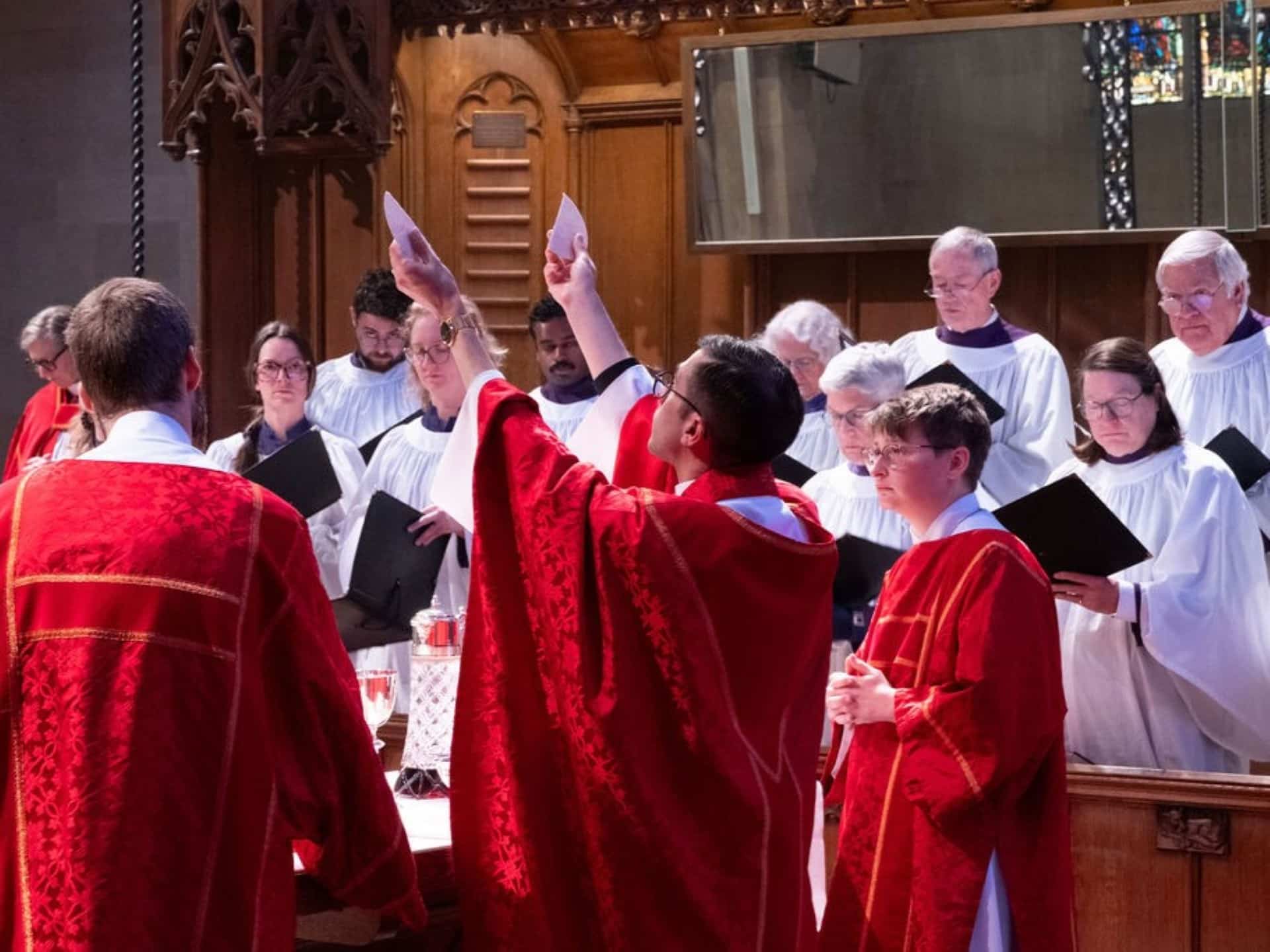
This is why we at Saint John’s can have three services on a Sunday that are each as beautiful as the last, utterly of Saint John’s, and distinctive in their style while absolutely being Episcopalian. Whatever resources we might use, the rubrics show us how to use them. It means that our 8 am, 10:30 am, and 5 pm services are all equal, even while being stylistically different. The rubrics invite us to be who we each are and encourage us to respond to the Spirit’s beckoning us toward this service or that.
Whether you are called to the Wilderness with its contemporary worship, wandering prayers of the people, and contemplative invitation; or the Rite I service with its historic language, august severity, and staid passion; or the Rite II service with its choral elegance, exalted processions, and festive celebration; each of these is the principal Sunday service because it is your Sunday worship.
Let us give thanks for the room the rubrics give us to be exactly who we are, for our services to be uniquely Episcopalian and distinctly themselves. It’s not just that we hear the same readings and preacher throughout these services or even that we pray the same prayers; it’s the Spirit who flows through them who is the same, the same Spirit who calls us all together in this our common prayer.
— The Reverend Canon Paul Keene